
All-In-One HR Platforms vs. Specialized Software: Which is Best for Under 50 Employees?
When a small business crosses the 15-employee threshold, the administrative cracks begin to show. By the time a company approaches 50 employees, relying on manual data entry, spreadsheets, and sticky notes is a massive operational liability. At this critical growth phase, business owners and operations managers face a fundamental procurement dilemma: should you build a customized small business hr tech stack by stitching together specialized software, or should you invest in the best all in one hr software to centralize your operations?
As a B2B Software Procurement Analyst, I evaluate this exact scenario daily. The decision ultimately comes down to balancing your immediate software budget against the long-term Return on Investment (ROI) of administrative hours saved. Here is a comprehensive guide to help you navigate this transition.
The Case for the Specialized Tech Stack
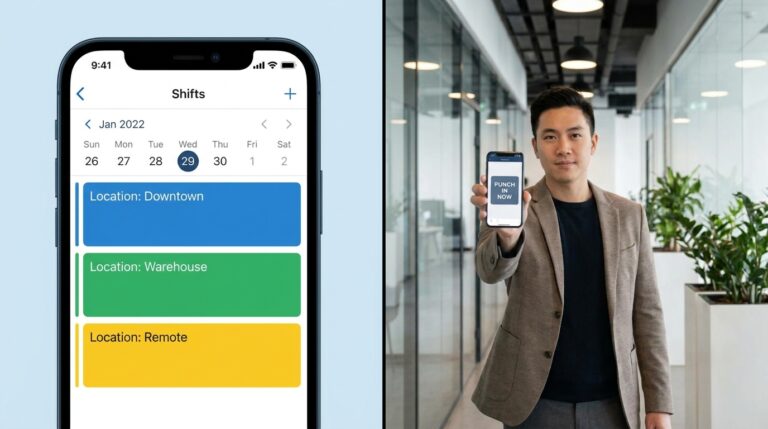
Building a specialized tech stack means utilizing distinct, “best-of-breed” software applications for each specific operational need. A classic example for a retail or hospitality business is using Homebase for shift scheduling and time tracking, integrating it with QuickBooks Online for payroll, and utilizing a standalone broker portal for benefits administration.
The Advantages:
-
Hyper-Focused Functionality: Specialized tools are engineered to do one thing flawlessly. A dedicated scheduling app will often have better shift-swapping features than a generalized HR platform.
-
Lower Initial Costs: You only pay for exactly what you need. Many specialized tools offer free tiers for very small teams, keeping your initial software overhead extremely low.
The Disadvantages:
-
The Data Silo Effect: If you hire a new employee, you must manually type their name, address, and wage into the scheduling app, then type it again into the payroll software, and type it a third time into the benefits portal.
-
Integration Nightmares: While software vendors promise seamless API integrations, they frequently break. When your time-tracking app fails to sync with your payroll software on a Friday afternoon, your manager is stuck doing manual math to ensure staff gets paid.
The Shift to All-In-One HR Platforms
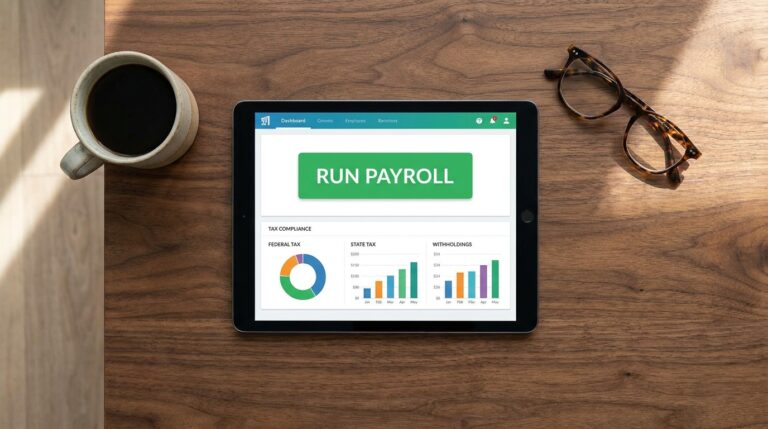
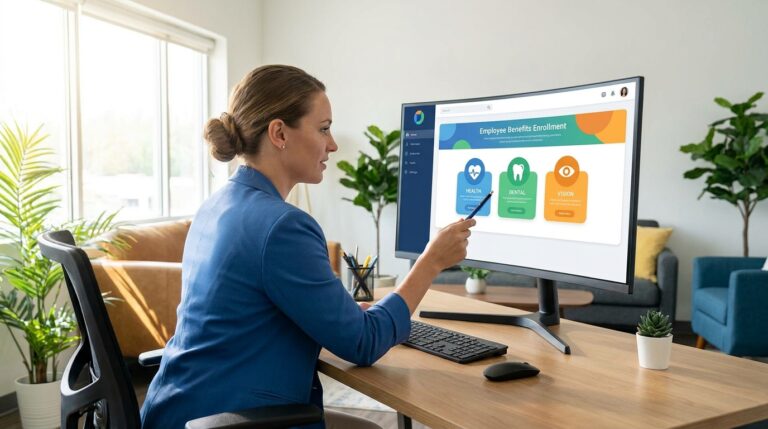
An all-in-one HR Information System (HRIS) eliminates data silos by operating from a single, unified employee database. When a new hire is entered into the system, that single data entry cascades automatically through payroll, benefits administration, compliance tracking, and time-off management.
The Heavyweights: Rippling vs Bamboo HR
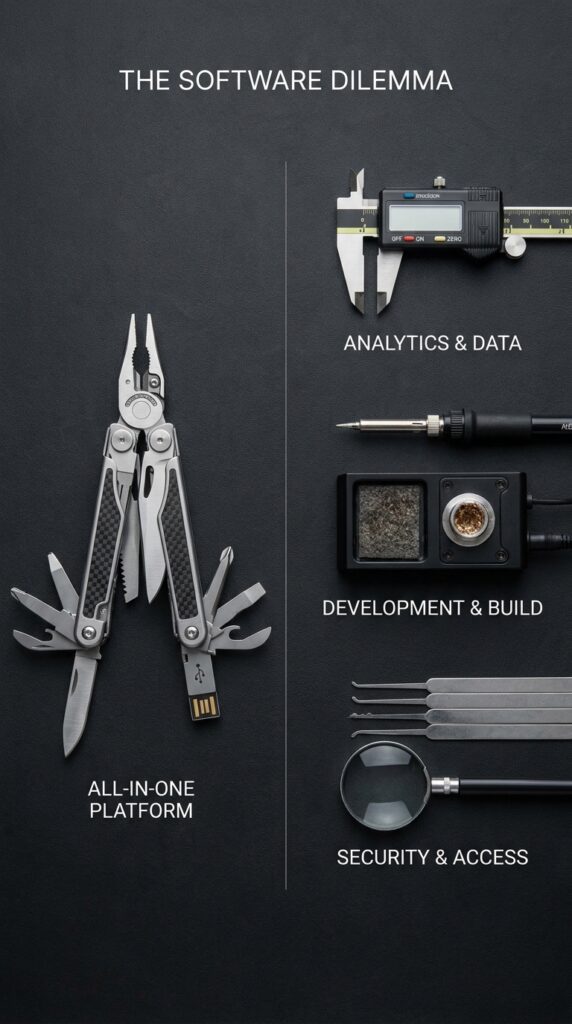
When evaluating platforms for under 50 employees, the procurement conversation almost always narrows down to a rippling vs bamboo hr comparison. While both are exceptional platforms, they serve fundamentally different operational philosophies.
-
BambooHR (The People-First Approach): BambooHR is widely considered the gold standard for pure human resources management in the SMB space. It boasts an incredibly intuitive interface and focuses heavily on the employee experience. It excels at digital onboarding, performance management, eNPS (employee satisfaction) surveys, and applicant tracking. If your primary goal is nurturing company culture and streamlining core HR tasks, BambooHR is exceptionally user-friendly.
-
Rippling (The Unified Workforce Engine): Rippling extends far beyond traditional HR. It is designed to unify HR, IT, and Finance. Its defining feature is cross-departmental automation. When you hire an employee in Rippling, the software does not just set up their payroll; it can automatically order and ship them a configured Apple MacBook, create their corporate email address, provision their access to Slack and Zoom, and issue them a corporate expense card. For tech-forward companies or fully remote teams, Rippling’s IT device management is a massive differentiator.
The PEO Alternative
If you do not want to manage HR software at all, there is a third option: utilizing a professional employer organization peo (such as Justworks or TriNet). In a PEO arrangement, you enter a “co-employment” model. The PEO legally becomes the employer of record for tax purposes. They handle all software, payroll, compliance, and workers’ compensation. More importantly, they group your small team with thousands of other employees to secure Fortune-500 level health insurance rates. However, this is the most expensive route, often costing hundreds of dollars per employee per month, and requires giving up significant control over your HR policies.
Decoding Pricing Structures: Base Fees vs. PEPM
To make a sound financial decision, you must understand how these SaaS vendors bill you.
Specialized tools often utilize a simple base fee plus a small user fee (e.g., $40/month base + $4 per user). This keeps costs highly predictable and generally low for small teams.
Conversely, all-in-one platforms utilize a modular Per Employee Per Month (PEPM) structure. A platform might advertise a starting rate of “$8 per user per month,” but this is often just for the core employee database. Adding the payroll module costs an extra $6 PEPM, adding benefits administration costs another $5 PEPM, and there is usually a monthly platform base fee of $40 to $100. For a 40-person company, a fully loaded all-in-one platform can easily cost between $600 and $1,000 a month.
Calculating the ROI in Administrative Hours Saved
Why would a small business willingly pay $800 a month for an all-in-one platform when a pieced-together tech stack only costs $200? The answer lies in administrative ROI.
As a procurement analyst, I calculate the true cost of software by factoring in the hourly wage of the person managing it. If your $60,000/year operations manager is spending 15 hours a week manually moving data between a scheduling app, a payroll system, and an Excel spreadsheet, you are bleeding approximately $1,000 a month in wasted labor.
Furthermore, manual data entry inevitably leads to compliance errors. A single missed local tax deduction or a botched health insurance enrollment can result in thousands of dollars in IRS penalties or liability claims.
Investing in scaling hr software protects your business. By migrating to a unified platform like Rippling or BambooHR, you automate onboarding, eliminate duplicate data entry, and guarantee payroll compliance. You effectively buy back your operations manager’s time, allowing them to focus on revenue-generating activities and strategic growth, rather than pushing digital paper. For any company aggressively marching toward the 50-employee mark, centralizing your HR technology is not just an expense; it is a foundational investment in your company’s survival.
B2B Disclaimer: The software comparisons, pricing models, and ROI metrics discussed in this article are intended for educational and procurement evaluation purposes only. Pricing and feature availability are subject to change by the vendors. Always conduct an independent software trial and consult with a legal or HR compliance expert before finalizing your technology stack.