
Paperless Employee Onboarding: Setting Up Self-Service HR for New Hires
As an HR Tech Consultant specializing in small business operations, I frequently audit companies that are aggressively growing their headcount but are still relying on administrative processes from the 1990s. When you finally find the perfect candidate, and they accept your offer, the excitement should be palpable. Instead, the first day of work is often reduced to a tedious, frustrating administrative marathon.
If your new hires are spending their entire first morning sitting in a breakroom filling out a mountain of physical paperwork, you are damaging your employer brand and wasting valuable payroll dollars. In today’s competitive labor market, transitioning to a streamlined, digital process is no longer a luxury reserved for massive corporations.
By implementing modern paperless onboarding software, you can entirely eliminate the administrative friction of day one, ensure airtight legal compliance, and create a welcoming, professional experience that actually excites your new team members. Here is exactly how transitioning to a digital onboarding system transforms your HR operations from a chaotic paper chase into a seamless, automated workflow.
The Old Way: The Time-Consuming Trap of Physical Paperwork
To understand the value of modern software, we must first look at the traditional onboarding process. Historically, when an employee walked through the door on Monday morning, they were handed a clipboard containing a W-4, a state tax withholding form, a complex I-9 verification document, a direct deposit authorization sheet, and a massive employee handbook.
This physical process is fundamentally flawed for several reasons:
-
Lost Productivity: The employee spends two to three hours filling out forms instead of meeting their team or beginning their actual training.
-
Data Entry Errors: An office manager or founder must manually read the employee’s handwriting and type that sensitive data into a payroll system. A single transposed digit on a bank routing number means the employee’s first paycheck bounces.
-
Security Risks: Physical folders containing highly sensitive Social Security numbers and bank details are often left on desks or stored in unlocked filing cabinets, creating a massive liability for identity theft.
The Modern Solution: The Employee Self Service Portal
The paradigm shift in modern HR technology revolves around the concept of self-service. Instead of handing an employee a clipboard on their first day, you grant them access to an employee self service portal the moment they sign their offer letter.
This portal is a secure, cloud-based environment that the new hire can access from their personal laptop or smartphone from the comfort of their own home, days or even weeks before their official start date.
By shifting the data entry responsibility directly to the employee, you eliminate the middleman. The new hire types their own legal name, their own Social Security number, and their own emergency contacts directly into the system. The software validates the formatting in real-time, completely eliminating the risk of unreadable handwriting and subsequent administrative data-entry errors.
Automating Compliance: Automated I-9 and W-4 Forms
The most stressful part of hiring an employee is ensuring you are fully compliant with federal and state tax laws. Failing to properly execute an I-9 form can result in severe fines from the Department of Homeland Security, and messing up a W-4 means your employee’s tax withholdings will be completely wrong at the end of the year.
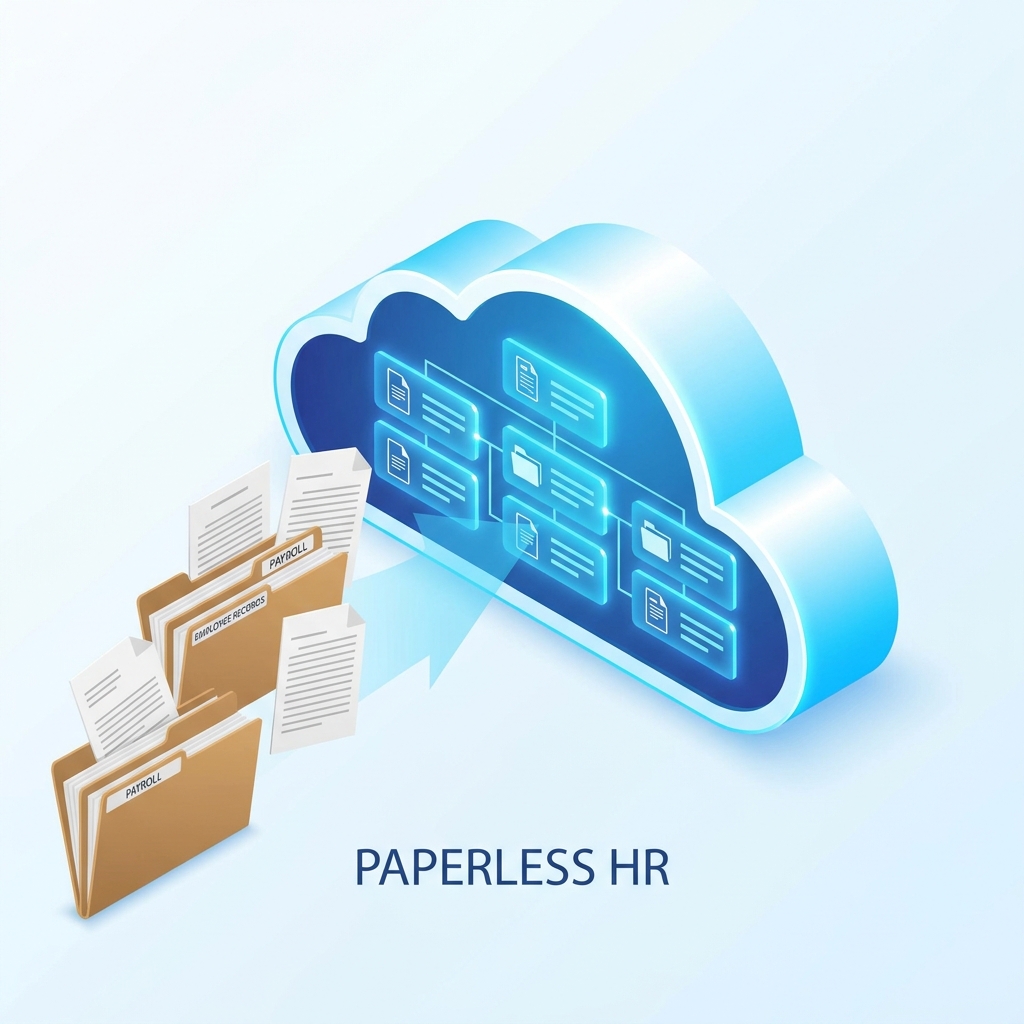
Top-tier onboarding platforms feature native integrations for automated i9 and w4 forms.
-
The Digital W-4: The software guides the employee through a digital version of the W-4, prompting them to select their filing status and dependents. Because the system is linked to your payroll engine, these tax selections automatically dictate the exact withholdings on their very first paycheck, without any manager intervention.
-
The Digital I-9: The employee fills out Section 1 of the I-9 digitally before their first day. On day one, the system prompts the manager to visually inspect the employee’s physical identification documents (like a passport or driver’s license) and complete Section 2 electronically.
-
Direct Deposit Routing: The new hire enters their bank account and routing numbers into the secure portal. The system often pings the bank network instantly to verify the account is real and active, guaranteeing that their first direct deposit will land perfectly on payday.
Legal Protection: The Digital Employee Handbook Signature
Protecting your business from labor disputes and wrongful termination lawsuits requires bulletproof documentation. Your employee handbook dictates your company policies regarding paid time off, anti-harassment rules, dress codes, and disciplinary procedures. However, having a handbook is useless in a court of law if you cannot explicitly prove that the employee read and agreed to it.
In the past, employees signed a physical acknowledgment page that was eventually stuffed into a drawer and lost. Modern platforms solve this by requiring a digital employee handbook signature.
When the new hire logs into their portal, they are presented with a digital copy of the handbook. They cannot complete their onboarding checklist until they electronically sign the document. The software generates a legally binding, time-stamped audit trail. If an employee ever claims they were unaware of a specific company policy, you can instantly pull a digital report proving the exact date, time, and IP address from which they signed the acknowledgment. This unalterable digital record is the ultimate legal armor for a small business owner.
Streamlining the Small Business HR Workflow
Building a cohesive small business hr workflow is all about working smarter, not harder. When you adopt a paperless onboarding strategy, you fundamentally change the nature of an employee’s first day.
Instead of spending their morning navigating government tax forms and signing repetitive compliance documents, the new hire walks through the door fully processed. Their payroll profile is already active, their tax withholdings are perfectly calculated, and their legal documents are securely stored in the cloud. You can immediately focus your energy on what actually matters: introducing them to your company culture, training them on your product, and integrating them into your team. In the modern business landscape, automation is not just about saving paper—it is about protecting your company and setting your people up for immediate success.
HR and Legal Disclaimer: The information provided in this guide is for educational and informational purposes only and does not constitute certified HR, legal, or tax advice. Labor laws, compliance requirements, and software features vary by jurisdiction and vendor. Always consult with a licensed employment attorney or certified HR professional to ensure your onboarding processes and documentation comply with local, state, and federal regulations.